

When a Church Fresco Hits the Headlines, AI Can Add an Objective Lens
Sometimes the most interesting technology demonstrations don't start in a lab, they start in the news.
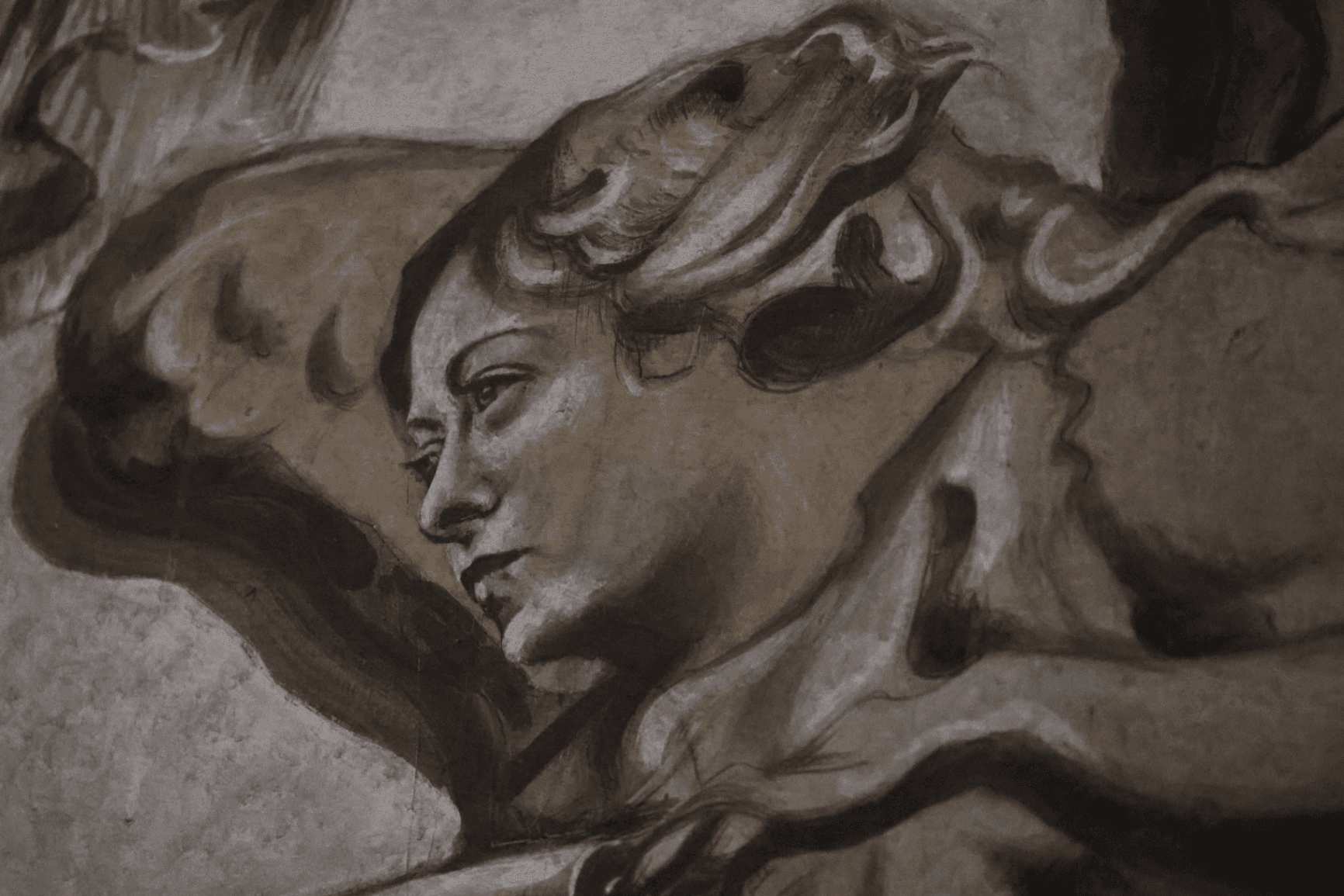
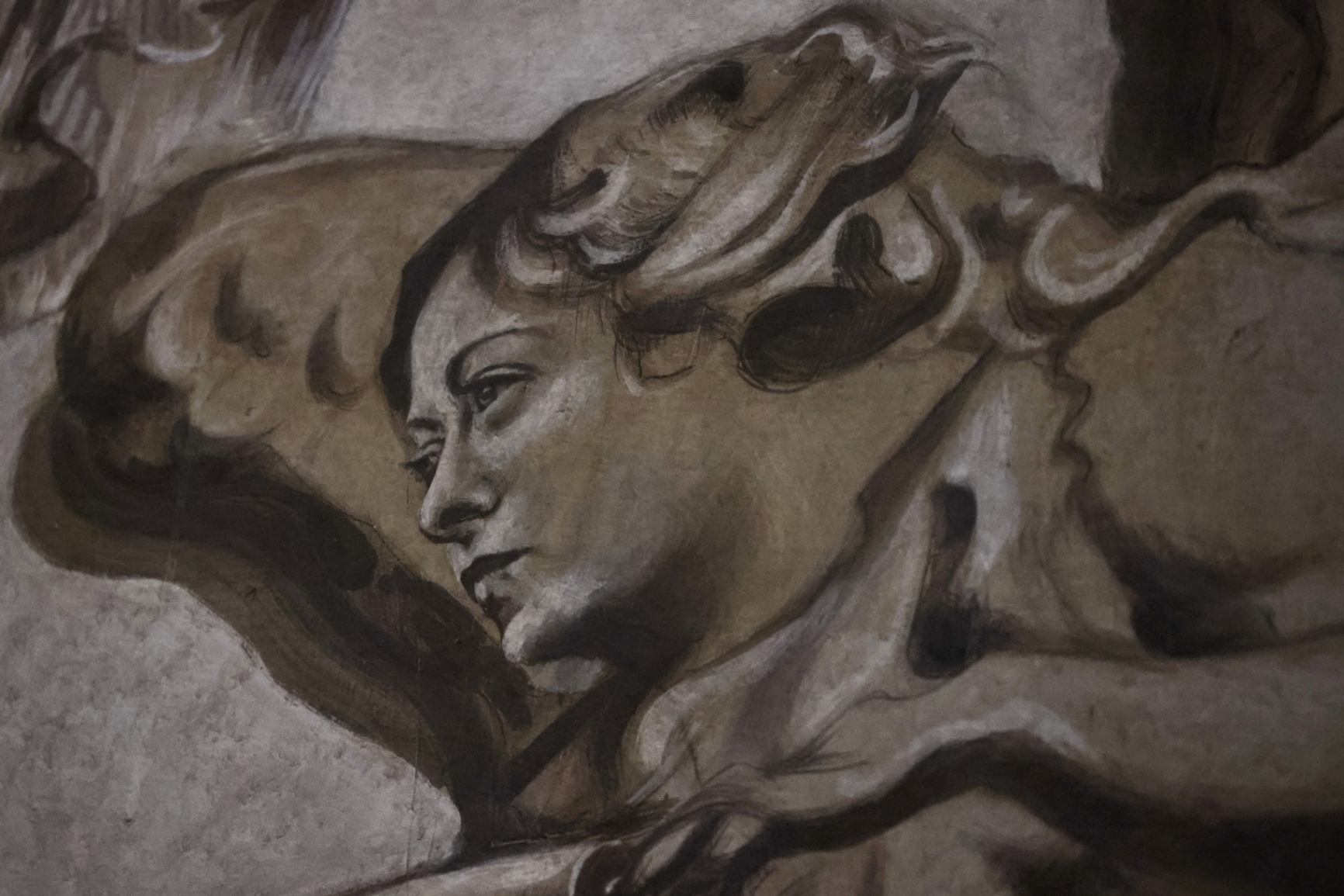
On January 31, 2026, Reuters reported a story that quickly traveled far beyond Italy: a restored angel fresco in the Basilica of St. Lawrence in Lucina (Rome) drew attention after a national newspaper suggested the angel now resembled Italian Prime Minister Giorgia Meloni. The culture ministry reportedly instructed an inspection, opposition voices raised concerns about art and propaganda, and the artist involved disputed any intentional alteration. Meloni, for her part, responded with a joke on Instagram: "No, I definitely don't look like an angel." (Source: Reuters, 31 Jan 2026)
Regardless of where one stands on the cultural debate, the story hinges on a familiar question:
Do these two faces actually resemble each other, or are we seeing what we want to see?
At SAFEZA AVA-X, we decided to approach the question the way investigators, analysts, and verification teams often do: with a measurable, repeatable comparison using our facial analysis platform, Sentinel Investigation.
What We Tested in Sentinel Investigation
Sentinel Investigation is designed for deep facial analysis and investigative workflows. It helps analysts compare faces, search across reference sets, and document results in a consistent, audit-friendly way.
For this test, we used the publicly available images associated with the media coverage:
- The fresco / angel face (the subject of the controversy)
- Reference images of Giorgia Meloni (as a known identity in the dataset we use for testing)
We then ran two standard steps:
- Face detection & normalization: locate the face, align it, and create a consistent representation (so angle, scale, and position don't dominate the result).
- Face embedding & similarity search: convert the face into a numeric vector ("embedding") and compare it to embeddings in a gallery of known references.
In plain terms: the system doesn't "look" at a face the way humans do. It measures patterns, geometry, distances, proportions, and texture cues, then returns similarity scores against a searchable index.

What the System Returned
In our Sentinel Investigation interface, the fresco face produced a set of top candidates that included images labeled as Giorgia Meloni, with similarity scores clustered in a narrow range. In a direct side-by-side comparison view, the system displayed a score around 1.10 for the fresco vs. a Meloni reference image.

A few clarifications matter here:
- Different systems use different scoring scales. Some score "higher is more similar," others score "lower is more similar," and some use bounded confidence values.
- What matters operationally is that a score is interpretable inside your system, relative to thresholds you calibrate, and paired with human review and context.
So what does this "match" mean?
It does not prove the artist intentionally painted the prime minister. It does not prove the faces are the same person (they aren't; one is a fresco).
What it does indicate is that the facial structure captured in the fresco is sufficiently close to the reference identity that the AI model flagged it as a strong candidate.
In other words, it provides objective support for the idea that the resemblance is not purely imaginary.
Why Photo-to-Fresco Matching Is Hard (And Why It Can Still Work)
Comparing a real photograph to a painted or restored artwork is one of the harder tasks in face recognition.
Here's why:
- Stylization: an artist simplifies features and emphasizes others.
- Texture mismatch: brushwork, plaster, cracks, and restoration introduce patterns a model might mistake for facial detail.
- Lighting and color shifts: fresco lighting is rarely comparable to studio or press photography.
- Pose limitations: many artworks show partial profiles or idealized angles.
And yet, modern facial recognition models can still perform surprisingly well in such cross-domain scenarios because they learn representations that prioritize stable cues, the relative arrangement of key facial landmarks (eyes, nose, mouth), proportions, and certain higher-level patterns that persist across changes in medium.
This is also why responsible systems avoid over-claiming: the better the model gets, the more tempting it becomes to treat similarity as certainty. In reality, similarity is a signal, not a conclusion.
From a "Fun Headline" to Real Investigative Value
It's easy to see this story as a curiosity. But the underlying capability, matching across imperfect, distorted, or "non-ideal" inputs, has serious applications:
1) Media verification and OSINT
When images circulate online, analysts often need to validate whether a claimed identity is plausible. AI-supported similarity search can quickly narrow possibilities and prioritize human review.
2) Historical archives and documentation
Archivists sometimes compare portraits, sketches, or damaged photographs to known references. Cross-domain search can accelerate cataloging and attribution work (with appropriate safeguards and scholarly oversight).
3) Investigations with low-quality evidence
In real-world cases, the input is rarely perfect: CCTV angles, motion blur, partial occlusions, and compression artifacts are common. Systems that handle difficult inputs can reduce time-to-lead.
4) Fraud and impersonation detection
While Sentinel Investigation is not about "mass surveillance," it can support controlled, legally authorized workflows where identity verification is essential and where an analyst must explain why a match is plausible.
The Responsible Way to Use Facial Recognition in Cases Like This
Because this story touches politics and culture, it's worth stating clearly: technology should not be used to manufacture narratives. It should be used to test claims with transparency and restraint.
In practical terms, responsible use means:
- Human-in-the-loop: AI provides candidates and scores; trained analysts decide what the evidence supports.
- Thresholds and calibration: you tune match thresholds based on your operational setting and false-positive tolerance.
- Multiple data points: one image comparison is weaker than repeated matches across different angles and sources.
- Auditability: you log what was searched, what was returned, and what decision was made.
- Legal and ethical governance: every deployment must align with local law, privacy requirements, and clear purpose limitation.
At SAFEZA AVA-X, we design Sentinel platforms for professional environments where governance isn't an afterthought, it's part of the system design.
What This Story Ultimately Shows
The Meloni "angel fresco" headline is fascinating because it reveals something important about perception and technology:
- Humans are excellent at story-driven recognition, we see patterns, resemblances, and meaning.
- AI is excellent at measurement-driven comparison, it gives repeatable similarity signals.
When you combine both, human judgment plus quantitative evidence, you get a more robust way to evaluate claims.
And sometimes, that evaluation can be done in minutes.
Want to See Sentinel Investigation in Action?
If your work involves facial analysis, investigative triage, or high-stakes verification workflows, Sentinel Investigation can help you move faster while keeping decisions reviewable and accountable.
Next step
Ready to see SAFEZA AVA-X in action?
Talk to our team about deploying sovereign AI video analytics for your security operations.